

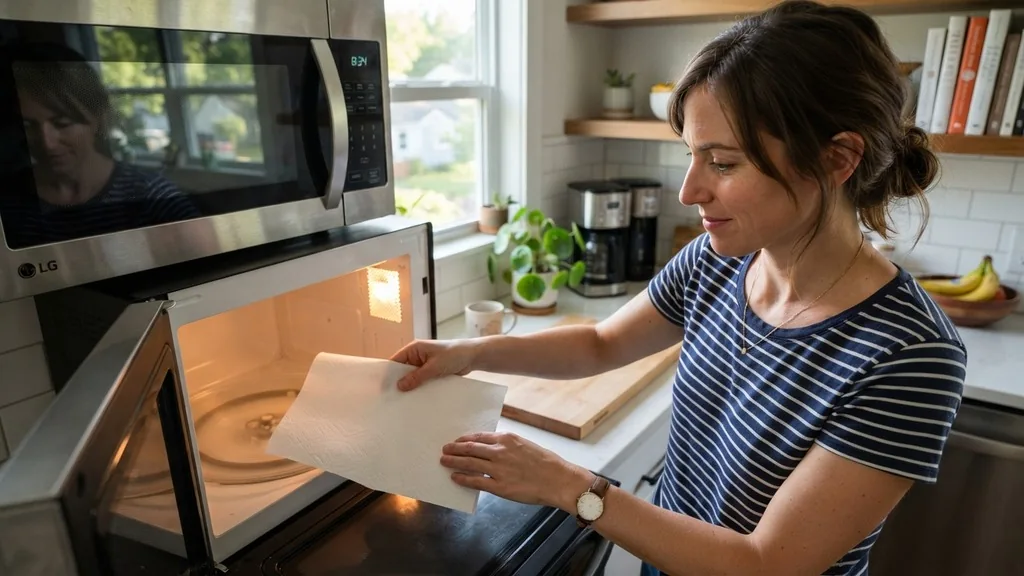
When you are rushing to heat up leftovers or prepare a quick snack, the question of whether paper towels can go in the microwave often arises. The short answer is yes, in most cases, using a paper towel to cover your food or absorb excess moisture is perfectly safe, provided you follow specific precautions.
Because microwaves work by agitating water molecules within items, materials that are dry and combustible can pose a risk if left unattended for too long. Understanding the physics of how your appliance interacts with cellulose-based products is the key to maintaining a safe kitchen environment.
Understanding the Science of Microwaving Paper Products
To understand why paper towels are generally safe for short bursts of heat, we must look at how a microwave functions. Microwaves generate electromagnetic waves that cause polar molecules—primarily water—to vibrate rapidly. This friction creates heat.
A standard paper towel is composed of cellulose fibers, which are organic materials. Under normal circumstances, these fibers do not contain enough moisture to heat up to the point of combustion on their own.
However, the danger arises when the paper towel is placed in the microwave for an extended period or when the food underneath it is extremely fatty or sugary. Fats and sugars can reach temperatures far exceeding the boiling point of water. If a piece of food splatters hot grease onto a dry section of a paper towel, that localized heat can exceed the ignition temperature of the paper.
This is why you should never walk away while heating food covered with a towel. The microwave-safe nature of these products is conditional; it relies on the presence of moisture from the food to keep the paper from drying out and becoming brittle.
Furthermore, it is important to distinguish between plain paper towels and those that might contain contaminants. Some paper products are processed with glues, resins, or even metallic flecks that are not visible to the naked eye.
While these are rare in standard household brands, it remains a best practice to use only simple, white, unprinted paper towels. Avoiding decorative prints or those with heavy dyes is a simple way to ensure no chemicals are off-gassed or melted into your meal during the reheating process.
Safe Usage Guidelines for Heating Paper Towels
If you decide to put paper in the microwave, you must adhere to a few fundamental rules to ensure your safety. First and foremost, always ensure the paper towel is clean and free of any non-paper components.
Many people mistakenly believe that any paper product is acceptable, but you should never use brown paper bags, newspaper, or recycled paper that might contain ink or staples. These items can spark or emit harmful fumes when subjected to microwave radiation.
The duration of your heating session is the most critical variable. For quick tasks like steaming vegetables or preventing splatters, a short period of 30 to 60 seconds is usually sufficient. If you are heating a dish for longer than two minutes, you should consider removing the paper towel or replacing it with a fresh one halfway through the process.
This prevents the towel from becoming overly dry and potentially scorched. The following list outlines the best practices for safe microwave use:
- Always use plain, white, unscented paper towels to avoid chemical leaching.
- Avoid using towels with intricate, dark, or metallic printed designs.
- Ensure the paper towel is not touching the heating elements or the sides of the microwave cavity.
- Use the paper towel as a loose cover rather than wrapping it tightly around the food, as this allows steam to escape.
- Monitor the microwave constantly when heating items for longer than one minute.
- Never use paper towels that have been used to clean up chemical spills or cleaning agents.
The Role of Paper Towels in Preventing Splatters
One of the most common reasons people use paper towels in the microwave is to prevent the inevitable mess that occurs when heating sauces, soups, or fatty foods. When liquids reach a boil, they often erupt, sending droplets against the walls and ceiling of your appliance.
A paper towel acts as a loose cover, effectively trapping the steam while allowing excess pressure to vent. This not only keeps your microwave clean but also helps retain the moisture in your food, preventing it from drying out.
When using a paper towel as a cover, it is essential to drape it lightly over the dish. If the towel is too heavy or pressed down, the steam trapped underneath can make the food soggy. By creating a tent-like structure, you allow the heat to circulate evenly.
For items like pizza or bread, placing a paper towel underneath the food can also be beneficial. It absorbs the steam released from the bottom of the crust, which would otherwise make the dough rubbery or soggy. This technique is a staple for anyone looking to maintain the texture of their leftovers.
It is worth noting that while paper towels are excellent for splatter control, they are not a substitute for proper microwave-safe lids or covers. If you frequently heat large quantities of food, investing in a glass or silicone microwave-safe cover is a more sustainable and durable option. However, for everyday, quick reheating tasks, the convenience of a disposable paper towel remains unmatched in the modern kitchen.
Addressing Topical Gaps: What Cannot Be Microwaved?
A frequent point of confusion for consumers is determining what constitutes a truly microwave-safe material versus items that should be strictly avoided. While paper towels are generally acceptable, other common household items can lead to disaster. According to the U.S.
Food and Drug Administration, understanding the compatibility of containers and coverings is vital for food safety. Many people incorrectly assume that if something is made of plastic or paper, it is safe, but this is a dangerous misconception.
To clarify the boundaries of safe microwave use, we can compare various materials and their reactions to electromagnetic energy. The following table provides a quick reference for common items found in the kitchen:
| Material | Microwave Safety Status | Notes |
|---|---|---|
| Plain Paper Towels | Safe (Short usage) | Use only white, unprinted sheets. |
| Brown Paper Bags | Unsafe | Risk of fire and release of toxic fumes. |
| Metallic Foil/Containers | Unsafe | Causes arcing, which can damage the appliance. |
| Styrofoam/Polystyrene | Variable | Only use if explicitly labeled “microwave safe.” |
| Glass/Ceramic | Safe | Ensure no metallic rims or decorative paint. |
The critical takeaway here is that any material that contains metal or has not been rigorously tested for heat resistance should be kept out of the microwave. Brown paper, in particular, is often overlooked because it looks similar to paper towels, but it is much more porous and prone to catching fire.
Furthermore, recycled paper products may contain trace amounts of metal or contaminants that can cause sparking. Always prioritize safety by sticking to products specifically designed for contact with food.
Why Do Paper Towels Not Burn in the Microwave?
A common question is why paper towels do not immediately ignite when placed in a microwave. The answer lies in the heat capacity of the paper and the surrounding environment. Paper catches fire when it reaches its ignition temperature, which is approximately 451 degrees Fahrenheit (233 degrees Celsius).
In a microwave, the energy is directed at water molecules. As long as there is moisture in the food or even a small amount of moisture in the air inside the microwave, the temperature of the paper towel will struggle to climb rapidly toward the ignition point.
However, this equilibrium is fragile. If the food being heated is low in moisture—such as a piece of dry bread—or if the microwave is set to a very high power level for a long duration, the paper towel will eventually dry out completely. Once the moisture is gone, the paper towel becomes a highly flammable, dry cellulose material.
At this point, the microwave radiation can cause the dry fibers to heat up quickly through dielectric heating. If there is a localized hot spot on the food, it can easily ignite the bone-dry paper.
This is why you should never use paper towels to heat items like popcorn or dry snacks for extended periods without supervision. The lack of moisture means the paper is much more likely to scorch or burn.
Always ensure that there is sufficient water content in the food you are heating to keep the environment within the microwave stable. If you ever notice the paper towel turning brown or smelling like burning, stop the microwave immediately.
The Impact of Microwave Power and Duration
The settings you choose on your microwave play a significant role in whether your use of paper towels will be safe. Most modern microwaves have adjustable power levels. While we often default to 100% power for everything, this is not always the best approach.
Lower power levels allow for more even heating, which reduces the chance of hot spots forming on your food. Hot spots are the primary culprits for localized overheating, which can lead to the paper towel catching fire.
When you put paper in the microwave for a specific task, consider adjusting the power level. For example, if you are simply warming up a roll or a slice of pizza, 50% to 70% power is often sufficient. This provides enough energy to warm the food without subjecting the paper towel to the intense, rapid heating cycle that occurs at full power.
Furthermore, consider the duration of your heating cycles. It is far safer to heat in 30-second intervals, checking the food and the condition of the paper towel between each burst.
If you are using a paper towel to cover a dish for an extended period, such as steaming vegetables for several minutes, check the towel every minute or so. If it appears to be steaming excessively or if it feels very brittle to the touch, it is time to remove it or replace it. By managing the power and the time, you exert control over the environment inside the microwave, ensuring that your convenience does not come at the cost of safety.
Common Myths and Misconceptions Debunked
There are many myths surrounding the use of paper towels in the microwave. One persistent rumor is that all paper towels are treated with chemicals that become toxic when heated. While it is true that some manufacturers use bleaching agents or binders, these are generally present in such small quantities that they do not pose a significant risk during short-term heating.
However, this is precisely why sticking to plain, white, and unscented towels is recommended. Avoiding “ultra-strong” or “printed” varieties minimizes your exposure to any additional resins or dyes.
Another myth is that paper towels are completely fireproof in a microwave. As we have established, this is false. Paper is combustible, and it will burn if the conditions are right.
The safety of using them is a matter of managed risk, not inherent fire resistance. People often feel a false sense of security because they have used paper towels hundreds of times without incident.
However, it only takes one instance of a dry corner touching a hot spot to cause a flare-up. Always maintain a healthy level of caution.
Finally, some users believe that you can use paper towels to absorb grease from fried foods inside the microwave. While this is technically possible, it is often counterproductive. The grease is absorbed into the paper towel, which then becomes a concentrated source of fuel.
If you are heating fatty foods, the paper towel will reach high temperatures much faster than it would with water-based foods. It is generally better to pat the food dry with a paper towel after it has been heated, rather than leaving the towel in the microwave during the heating process.
Frequently Asked Questions
Is it safe to leave a paper towel in the microwave for 2 minutes?
Yes, it is generally safe to leave a plain white paper towel in the microwave for two minutes, provided the food underneath is moist and the towel is not touching the sides of the microwave. Always monitor the appliance to ensure the towel does not become overly dry or scorched.
Why should I avoid using printed or colored paper towels?
Printed or colored paper towels may contain dyes, inks, or chemical additives that are not designed to withstand high heat. These substances can off-gas or leach into your food when heated, potentially introducing unwanted chemicals into your meal. Stick to plain, white, unscented towels for maximum safety.
Can I use a paper towel to cover a bowl of soup?
Yes, using a paper towel as a loose cover for a bowl of soup is an excellent way to prevent splatters while allowing steam to escape. Ensure the towel is loosely draped over the top rather than sealed tightly, as this prevents pressure buildup and keeps the steam from making the food soggy.
What should I do if the paper towel starts to smoke?
If you notice the paper towel smoking, stop the microwave immediately. Open the door to let the smoke dissipate and carefully remove the paper towel using oven mitts or tongs, as it may be extremely hot. Do not restart the microwave until you have cleared any charred debris from the interior.


