

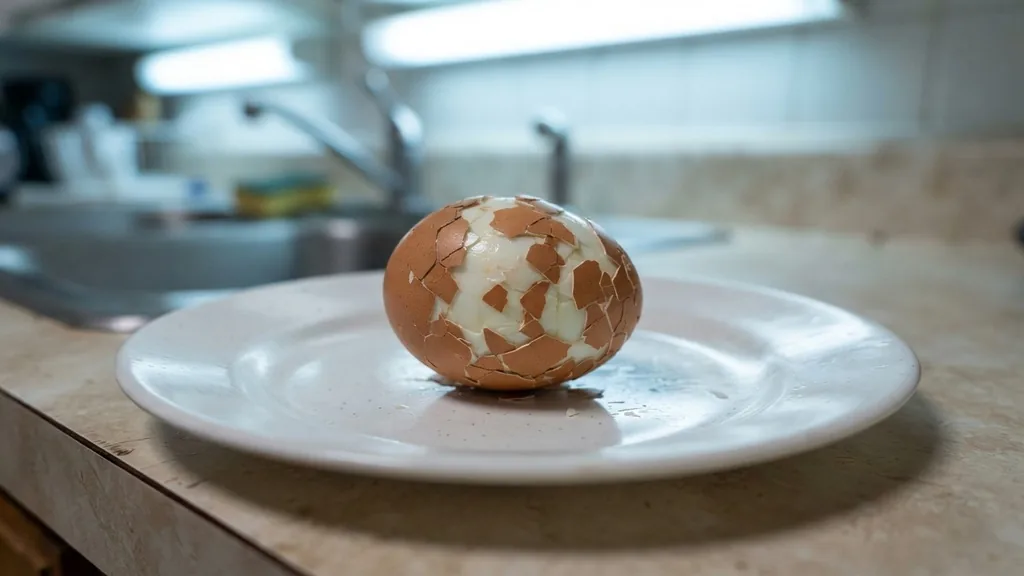
The short answer to the question of whether you can microwave hard boiled eggs is yes, but it comes with significant caveats that you must understand to avoid a messy, potentially dangerous kitchen disaster. While many people assume that because a hard boiled egg is already cooked, it is safe to toss into the microwave for a quick reheat, the reality is that the internal structure of an egg reacts violently to microwave radiation.
When you microwave a whole, intact egg, the water molecules inside the yolk and white heat up rapidly, creating steam that becomes trapped by the protein-dense membrane and the shell. Because the shell is rigid, it cannot expand to accommodate this pressure, leading to a sudden, loud, and often destructive explosion.
Understanding the physics of why this happens is essential for any home cook. Microwaves work by agitating water molecules, causing them to vibrate and generate heat. In most foods, this steam has a way to escape.
In a hard boiled egg, the yolk is essentially a pressurized vessel. If you attempt to reheat a whole egg in its shell, the steam builds up until the structural integrity of the shell fails, resulting in an outward burst of hot egg fragments.
This phenomenon has been documented by food safety experts and engineers alike, proving that it is not just an old wives’ tale but a legitimate physical reaction. However, by changing your approach and modifying the egg’s state before heating, you can successfully warm your eggs without creating a hazard.
The Physics of Microwave Egg Explosions
To truly appreciate why you should be cautious, you must look at how microwave energy interacts with biological materials. A hard boiled egg is composed of distinct layers: the shell, the membrane, the egg white (albumen), and the yolk.
When you place a whole egg in a microwave, the energy penetrates the exterior and heats the interior rapidly. Because the yolk has a higher fat content and a different density than the white, it tends to heat up faster and reach higher temperatures.
The internal pressure builds because the steam produced cannot escape through the semi-permeable membrane or the shell. Unlike heating water in a cup where steam is released into the air, the steam inside an egg is encapsulated.
Once the internal pressure exceeds the tensile strength of the shell, the egg undergoes a rapid decompression. This is not just a gentle crack; it is a violent rupture that can damage the interior of your microwave or, worse, cause hot egg to spray onto your face or hands if you happen to be looking into the appliance when it occurs.
It is important to note that even after you remove the egg from the microwave, the danger persists. The yolk may remain superheated for several seconds. If you bite into a whole, microwaved egg, the act of piercing the yolk can trigger the delayed release of that trapped steam, which can cause severe burns to your mouth and tongue.
This is why professional safety organizations, such as the U.S. Food and Drug Administration, generally advise against heating whole eggs in their shells using microwave radiation. The risk of thermal injury is simply too high when compared to traditional, safer methods of reheating.
How to Safely Reheat Hard Boiled Eggs
If you are determined to use your microwave to reheat hard boiled eggs, the safest way to do so is to remove the shell entirely and cut the egg into smaller pieces. By slicing the egg into quarters or halves, you effectively eliminate the “pressure vessel” problem. With the shell and membrane removed, and the structure of the egg broken, the steam generated by the microwave has a clear path to escape into the air.
To do this correctly, follow these steps:
- Peel the hard boiled egg completely, ensuring no shards of shell remain.
- Place the egg in a microwave-safe bowl or container.
- Slice the egg into at least four pieces to prevent steam pockets from forming.
- Cover the container with a damp paper towel to help retain some moisture, preventing the egg from becoming rubbery.
- Heat in short intervals, such as 10 to 15 seconds, checking the temperature between each burst.
By following this method, you are not heating a sealed container, but rather individual pieces of protein. The moisture from the damp paper towel also serves an important function: it creates a steam environment that keeps the egg whites from drying out.
Microwaves are notorious for making proteins like eggs and chicken turn “rubbery” or tough because the heat causes the proteins to tighten and squeeze out their internal moisture. Keeping the heat duration short and the humidity high is the key to maintaining a pleasant texture.
Comparison of Reheating Methods
When choosing how to bring your refrigerated eggs back to an enjoyable temperature, it helps to compare the microwave to other, more conventional methods. While the microwave is undeniably the fastest option, it is not always the best for quality.
| Method | Time Required | Texture Quality | Safety Level |
|---|---|---|---|
| Microwave (cut) | 30 seconds | Fair (can be rubbery) | Moderate (if sliced) |
| Hot Water Bath | 5-7 minutes | Excellent | High |
| Steaming | 3-5 minutes | Very Good | High |
As seen in the table, the hot water bath is the gold standard for quality. By placing your peeled, hard boiled eggs into a bowl of hot (not boiling) water for a few minutes, you gently raise the temperature of the egg without subjecting it to the harsh, uneven energy of microwave radiation. This method keeps the yolk creamy and the white tender.
While it takes longer, the final result is far superior to the microwave, which often results in a tough, unappealing texture. If you are in a rush, the microwave is a viable tool, but it should be viewed as a convenience of last resort rather than a preferred culinary technique.
Avoiding the Rubberized Texture
One of the most common complaints about microwaving eggs is that they become “rubbery.” This happens because microwave energy targets the water molecules within the protein matrix.
As these molecules vibrate, they generate heat that causes the protein strands to denature and tighten rapidly. In a hard boiled egg, this process is already complete, but reheating it further causes the proteins to contract even more, forcing out the remaining moisture.
To mitigate this, you must control the power level of your microwave. Most modern microwaves allow you to adjust the power percentage.
Instead of using 100% power, which is essentially “blast mode,” consider dropping your microwave to 50% power. This allows the heat to distribute more evenly throughout the egg, preventing the outer edges from becoming tough while the center remains cool.
Another trick is to add a small amount of water to the bottom of the bowl. Even a teaspoon of water can help create a steam-rich environment. The steam prevents the surface of the egg white from drying out.
When you combine reduced power with the addition of water, you significantly improve the chances of having a warm egg that still retains its original texture. Patience is a virtue here; do not try to reach “piping hot” status in one go. A warm, pleasant temperature is usually sufficient for a snack or a salad topping.
Common Mistakes and Misconceptions
Many people believe that if they poke a few holes in the egg with a fork, it will be safe to microwave the whole thing. This is a dangerous misconception.
While piercing the yolk with a skewer or a fork might release some pressure, it does not guarantee that the egg won’t still explode. The hole can easily get plugged by the coagulated egg white or yolk as it expands, effectively resealing the “vessel” and leading to a delayed explosion.
Another misconception is that the size of the egg matters. Whether it is a small, medium, or large egg, the physics remain the same. The internal volume of the egg is sufficient to cause a significant burst of pressure.
People often try to justify microwaving whole eggs by claiming they have done it before without incident. While you might get lucky a few times, the variables—such as the exact maturity of the egg, the power of your specific microwave, and the temperature of the egg when it started—make it a game of Russian Roulette.
It is also vital to discard any hard boiled eggs that have been left out at room temperature for more than two hours. Even if you plan to reheat them, the microwave will not make them safe if they have already entered the “danger zone” for bacterial growth.
Reheating does not destroy all toxins produced by bacteria that may have colonized the egg while it sat on your counter. Always keep your boiled eggs refrigerated until the moment you are ready to prepare them for consumption.
Addressing Topical Gaps: The Science of “Poached” Microwave Eggs
While the focus here is on reheating hard boiled eggs, many readers often conflate this with the process of “cooking” a raw egg in the microwave. It is important to differentiate between the two because the failure points are slightly different.
When you cook a raw egg in the microwave, you are starting with a liquid. When you reheat a hard boiled egg, you are dealing with a solid.
The topical gap often exists in the lack of information regarding the “microwave egg poacher” gadgets sold in stores. These devices are designed to hold the egg in a way that manages heat distribution.
They work by creating a water bath around the egg, essentially steaming it rather than exposing it to direct microwave radiation. If you are interested in using a microwave for eggs, investing in one of these tools is a much safer, more consistent approach than trying to heat a whole, shelled egg.
Furthermore, there is little discussion about the impact of the refrigerator on the heating process. A cold egg straight from the fridge requires more energy to reach a comfortable temperature than an egg that has sat on the counter for ten minutes.
The temperature differential between the cold center and the hot outer layers in a microwave can lead to uneven heating, where the outside is rubbery and the inside is still cold. Always bring your eggs to room temperature before attempting to reheat them if you want the best results.
FAQ: Common Questions About Microwaving Eggs
Can I microwave a hard boiled egg if I just cut it in half?
Yes, cutting the egg in half is the most effective way to prevent an explosion. By exposing the yolk and white, you allow steam to escape during the heating process. Always use a microwave-safe container and keep the heating time short to avoid a rubbery texture.
Why did my egg explode even though it was peeled?
While rare, if you heat a peeled egg at very high power for too long, the internal moisture can turn into steam so rapidly that the outer surface of the egg white tears. This is usually caused by excessive heat intensity rather than the pressure of a shell.
Is it safe to reheat eggs in a microwave if they are in a salad?
It is generally not recommended to microwave a salad containing hard boiled eggs. The vegetables will wilt and become unpleasantly mushy. If you want a warm salad, remove the egg slices, warm them separately using the short-interval method, and add them back to the bowl afterward.
What is the best way to tell if a microwaved egg is done?
Use a food thermometer to check the internal temperature, aiming for about 145 degrees Fahrenheit (63 degrees Celsius). If you do not have a thermometer, simply touch the egg pieces. They should be warm throughout, not piping hot, as the residual heat will continue to cook the protein.


