

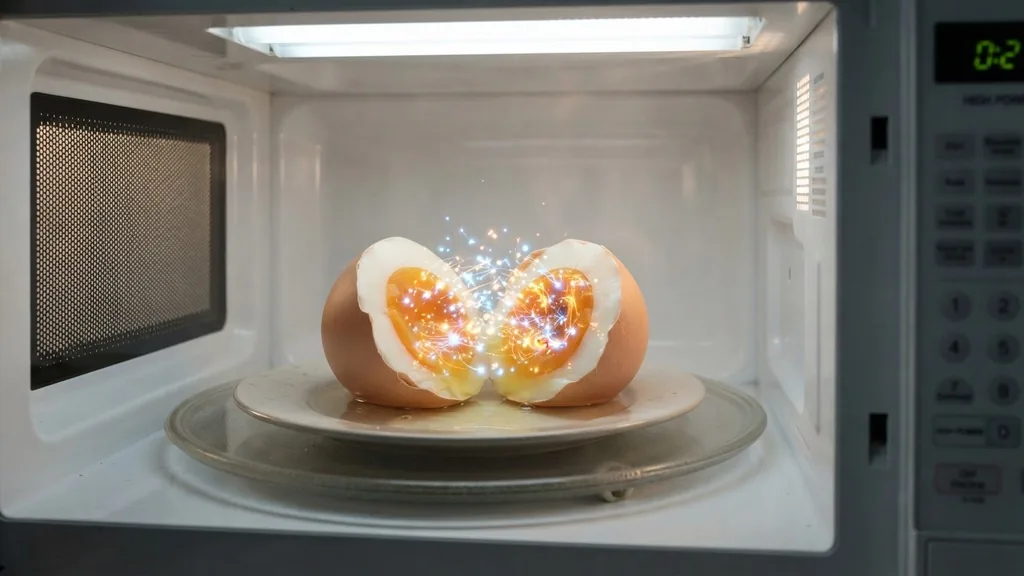
Preparing a quick breakfast or a protein-packed snack often leads people to wonder how to boil an egg in the microwave. While the traditional stovetop method is the gold standard for many, the convenience of modern kitchen appliances makes the microwave an attractive alternative for those pressed for time. However, the process is not as straightforward as simply placing an egg in the device and pressing start.
Because microwaves heat food by agitating water molecules, eggs can build up intense internal pressure, leading to messy explosions if not handled with scientific precision. Understanding the physics of heat transfer and the importance of containment is essential for anyone looking to master this technique.
The Physics Behind Microwave Egg Cooking
To understand why eggs behave differently in a microwave compared to a pot of boiling water, one must look at how electromagnetic radiation interacts with biological matter. When you place an egg in a microwave, the waves excite the water molecules within the yolk and white. This causes rapid heating, which leads to the creation of steam.
Because an egg is encased in a rigid, non-porous calcium carbonate shell, that steam becomes trapped. As the internal temperature rises, the pressure increases exponentially. Eventually, the shell reaches its structural limit, resulting in a sudden, high-velocity release of egg contents—often referred to as a microwave explosion.
To successfully cook an egg using this method, you must manipulate the environment to mitigate this pressure. The most effective way to do this is by submerging the egg in a bowl of water. This creates a thermal buffer, allowing the heat to distribute more evenly and preventing the shell from drying out and becoming brittle.
Furthermore, adding specific ingredients to the water can help regulate the temperature and protect the integrity of the shell. By controlling the power levels and the duration of the heating process, you can achieve consistent results, whether you prefer your eggs soft-boiled or hard-boiled.
Essential Safety Protocols and Tools
Safety is the absolute priority when learning how to boil an egg in the microwave. Never attempt to microwave an egg in its shell without submerging it in water, and even then, caution is paramount. The primary risk is not just the mess, but the potential for the egg to burst while you are removing it from the appliance, which can lead to severe thermal burns.
Always use a microwave-safe bowl that is deep enough to cover the egg completely. Glass or ceramic bowls are typically the best choices, as they distribute heat more predictably than some plastics.
Before you begin, ensure you have the following items ready:
- A deep, microwave-safe bowl or mug.
- Room temperature eggs to prevent thermal shock.
- Water (enough to cover the egg by at least one inch).
- A pinch of salt, which helps raise the boiling point and may help seal minor cracks in the shell.
- A slotted spoon or tongs for safe removal.
- A bowl of ice water for an immediate cooling bath.
It is also important to consider the wattage of your microwave. Most standard home microwaves operate between 700 and 1200 watts.
If you have a high-wattage unit, you will need to reduce the cooking time significantly to avoid overcooking the yolk, which can turn it rubbery or cause the aforementioned structural failure. Always err on the side of caution by starting with shorter intervals and checking the progress of the egg.
Step-by-Step Method for Microwave Boiling
The process of boiling an egg in the microwave requires a methodical approach. Start by filling your microwave-safe bowl with enough water to fully submerge the egg. You should add about a half-teaspoon of salt to the water; this is a common practice used by professional chefs to assist in the coagulation of egg whites should the shell develop a hairline crack during the heating process.
Once the water is prepared, gently place the egg into the bowl. Ensure the egg is not touching the sides of the bowl too firmly, as this can create hot spots.
Microwave the bowl on medium-high power (about 50-70% power) for approximately 4 to 6 minutes. The exact timing depends heavily on how firm you want the yolk to be.
After the timer goes off, let the egg sit in the hot water for an additional 2 to 3 minutes. This resting period is critical, as it allows the residual heat to finish the cooking process gently without relying on the aggressive microwave energy. Finally, use your slotted spoon to remove the egg and immediately transfer it to a bowl of ice water.
This “shocking” technique stops the cooking process instantly, ensuring the yolk stays creamy rather than turning that unappealing shade of grey-green that often occurs with overcooked eggs. For more information on food safety and handling, you can consult the official food safety guidelines provided by federal health agencies.
Comparing Cooking Times and Techniques
Achieving the perfect texture requires balancing time and power. Because every microwave is unique, you may need to conduct a test run to determine the “sweet spot” for your specific appliance.
The following table provides a general guideline for cooking large eggs at 800 watts. Note that these times are estimates and should be adjusted based on your personal results.
| Desired Doneness | Cooking Time (Minutes) | Resting Time (Minutes) |
|---|---|---|
| Soft-Boiled (Runny Yolk) | 3.5 | 2 |
| Medium-Boiled (Jammy Yolk) | 4.5 | 2 |
| Hard-Boiled (Firm Yolk) | 6.0 | 3 |
If you find that your eggs are coming out undercooked, increase the cooking time by 30-second increments. Conversely, if the whites are becoming rubbery or the egg is exploding, decrease the power level rather than the time. Lowering the power level is often the secret to success, as it provides a gentler heat that mimics the slow, rolling boil of a traditional stove.
Addressing Common Challenges and Topical Gaps
One of the most frequently asked questions regarding this topic is whether one can microwave eggs without the shell to avoid the explosion risk entirely. While “poaching” an egg in the microwave is a different technique, it is often confused with boiling.
If you are struggling with the shell-on method, you can crack the egg into a small, water-filled ramekin and cover it with a microwave-safe saucer. This effectively mimics the results of a boiled egg without the risk of a pressurized shell failure.
Another common issue is the “sulfur smell” that sometimes permeates the kitchen when eggs are microwaved. This occurs when the proteins in the egg whites break down too quickly, releasing hydrogen sulfide gas. To mitigate this, ensure you are not overcooking the egg.
The longer the egg is exposed to intense heat, the more likely it is to release these odors. Using fresh eggs is also a significant factor; older eggs have higher pH levels and are more prone to developing strong odors and being difficult to peel.
Furthermore, many users ask if they can “boil” multiple eggs at once. While it is technically possible, it is not recommended for beginners.
Microwaves create uneven electromagnetic fields, meaning one egg may receive more energy than another, leading to inconsistent results or a scenario where one egg explodes while the others remain raw. If you must cook more than one, ensure they are in a wide, flat container and spaced evenly apart, and be prepared to increase the total cooking time slightly.
Tips for Easy Peeling and Storage
The final hurdle in the process is peeling. Often, eggs cooked in the microwave can be stubborn, with the white sticking to the shell.
The ice bath mentioned earlier is the most effective solution for this. By rapidly cooling the egg, the contents contract slightly away from the shell, creating a small gap that makes peeling much easier.
If you plan to store your microwave-boiled eggs, ensure they are completely cooled before placing them in the refrigerator. A hard-boiled egg can be kept in the shell for up to one week in the fridge. When you are ready to eat, you can briefly warm them in a cup of hot water, but avoid putting them back in the microwave, as the internal pressure will build up again, leading to an explosion even after the egg has been cooked.
When peeling, try tapping the egg gently on a hard surface to create a network of cracks all over the shell. Start peeling under a thin stream of cold running water.
The water helps to slip beneath the membrane and separates the shell from the white. If you find the shell is still sticking, it may be that your eggs were too fresh; eggs that have been in the refrigerator for a few days are generally easier to peel than eggs bought directly from the farm.
Refining Your Microwave Technique
Mastering the microwave for egg preparation is a skill that saves time and energy, provided you respect the science of the process. The transition from stovetop to microwave isn’t just about changing the heat source; it is about changing your approach to heat management. By focusing on low-power settings, using a protective water bath, and incorporating a rest period, you can achieve a result that is indistinguishable from traditional boiling.
Experimentation is key. Start by logging your results. If you used 5 minutes at 60% power and the yolk was too runny, try 5 minutes and 30 seconds next time.
If the white was tough, try 4 minutes and 30 seconds at 50% power. By treating your microwave like a laboratory, you remove the guesswork and replace it with repeatable success.
Remember, the goal is not to force the egg to cook as fast as possible, but to cook it as evenly as possible. With patience and attention to the nuances of your specific appliance, you will find that the microwave is a perfectly viable, and often superior, tool for preparing eggs for salads, sandwiches, or a quick breakfast on the go.
Frequently Asked Questions
Can I microwave an egg with the shell on?
It is highly dangerous to microwave a whole egg in its shell without submerging it in water. The internal steam pressure will cause the egg to explode violently. Always place the egg in a bowl filled with enough water to cover it completely to prevent an explosion.
Why does my egg explode even when in water?
Explosions usually occur due to excessive power settings or uneven heat distribution. Using a microwave with very high wattage can cause the water to boil too aggressively. Always use medium-low power settings and ensure the egg is fully submerged to keep the internal pressure within safe limits.
How long should I let the egg rest after microwaving?
A resting period of at least 2 to 3 minutes is essential. This allows the heat to penetrate the yolk center evenly without the need for further microwave radiation. Skipping this step often leads to eggs that are overcooked on the outside but undercooked in the middle.
Are microwave-boiled eggs safe to eat?
Yes, provided they are cooked until the yolk and white are firm. As with any cooking method, ensure the internal temperature reaches a safe level to kill potential bacteria. If the egg shell cracks during the process, it is still safe to consume as long as it has been cooked through.


