

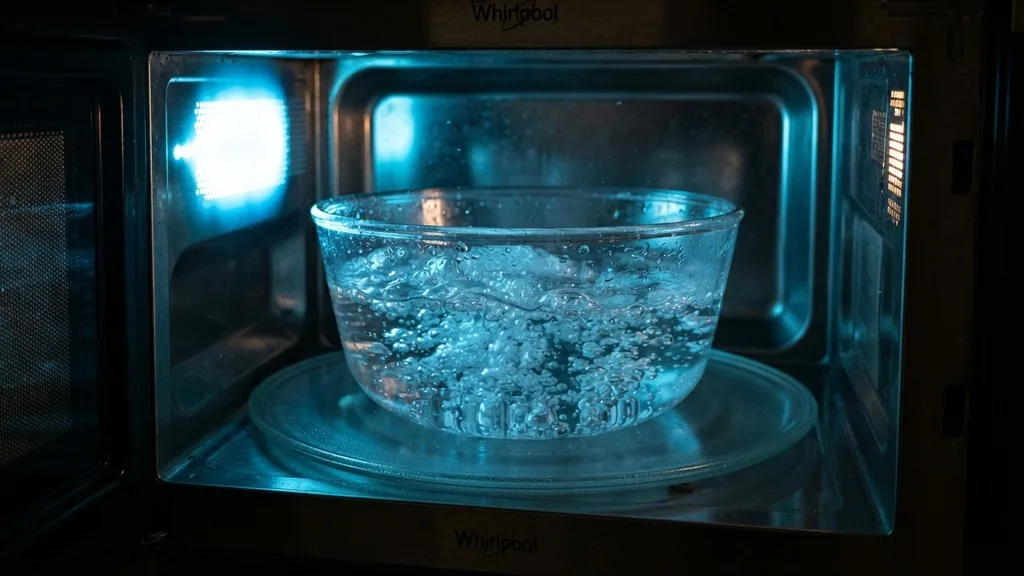
Many home cooks assume that a microwave oven functions like a miniature, high-speed furnace, but the reality is much more nuanced. When you ask how hot does a microwave get, the answer is not a fixed number like a traditional oven set to 400 degrees. Instead, microwaves operate by targeting the water molecules within your food, causing them to vibrate and generate thermal energy.
Because the microwave does not heat the air inside the chamber, the maximum temperature reached is primarily limited by the boiling point of the liquid present in the food itself. Understanding this fundamental mechanism is essential for both food safety and achieving consistent culinary results in your kitchen.
The Physics of Dielectric Heating
At the heart of every microwave oven is a component called a magnetron. This device converts electrical energy into high-frequency electromagnetic waves, specifically in the microwave portion of the radio spectrum. These waves oscillate back and forth at roughly 2.45 gigahertz, a frequency chosen because it is highly effective at interacting with polar molecules—most notably water.
When these waves penetrate your food, they force water molecules to rotate rapidly, creating friction at a molecular level. This phenomenon, known as dielectric heating, is the primary source of heat.
Unlike a conventional oven that relies on convection or radiation to heat the surface of an item, microwaves penetrate deep into the substance. This means that the temperature inside the food can rise quite rapidly. However, the process is self-limiting.
Once the water molecules reach their boiling point—212 degrees Fahrenheit or 100 degrees Celsius at sea level—they convert into steam. Because the microwave energy is specifically tuned to excite liquid water, it becomes significantly less efficient at heating steam. This is why you rarely see food “browning” or becoming crispy in a microwave; the surface moisture evaporates, but the dry surface does not continue to increase in temperature in the same way it would in a searing hot pan or a hot oven.
Temperature Limits and Food Safety
A common misconception is that the microwave oven has a setting that determines its internal ambient temperature. In truth, the appliance is simply a transmitter of energy. If you place a cup of water in the microwave, the water will heat until it reaches its boiling point.
If you continue to run the microwave, the water will turn into steam and eventually boil away, but the liquid itself will not exceed 212 degrees Fahrenheit (100 degrees Celsius) under normal atmospheric pressure. This distinction is vital for food safety, particularly when preparing poultry, meats, or leftovers.
The United States Department of Agriculture emphasizes that for food safety, the internal temperature of cooked items is the only reliable metric. Because microwave heating can be uneven, creating “cold spots” where bacteria might survive, it is crucial to use a food thermometer to ensure that the entire item has reached a safe temperature, such as 165 degrees Fahrenheit for chicken. Relying on the microwave timer alone is often insufficient, as the distribution of heat depends heavily on the density, moisture content, and shape of the food you are cooking.
Factors Influencing Heating Speed and Intensity
Several variables dictate how quickly food absorbs energy and how hot it gets during a specific time interval. The power rating of your microwave, usually measured in watts, is the most obvious factor.
A 1100-watt microwave will transfer energy much faster than an older 700-watt model. If you are following a recipe that assumes a standard wattage, using a more powerful machine can lead to overcooking or even burning the edges of your food, while a weaker machine might leave the center frozen.
The mass and volume of the food also play a significant role. If you double the amount of food in the microwave, you generally need to increase the cooking time, though not necessarily by a full factor of two. The geometry of the item matters as well; food with a high surface-area-to-volume ratio will heat differently than a dense, spherical object.
Furthermore, the presence of salt, fat, and sugar significantly alters the heating profile. Fats and sugars have lower specific heat capacities than water, meaning they can reach much higher temperatures much faster, which is why a slice of pizza might have a molten cheese topping while the bread remains lukewarm.
| Food Type | Relative Moisture Content | Maximum Potential Temperature |
|---|---|---|
| Vegetables (Leafy) | High | ~212°F (100°C) |
| Meat (Raw) | Moderate | 165°F+ (Internal Goal) |
| Oils and Fats | Low | >300°F (Potential to burn) |
| Sugar-based Sauces | Variable | >250°F (Sticky/Caramelized) |
Why Microwaves Do Not Brown Food
If you have ever wondered why a microwave cannot produce the golden-brown crust found on a loaf of bread or a seared steak, the answer lies in the Maillard reaction. This chemical reaction, which creates the complex flavors and brown colors associated with cooked food, typically requires temperatures well above 300 degrees Fahrenheit. Because the microwave relies on water evaporation to transfer heat, the surface of the food is effectively “stuck” at the boiling point of water for as long as there is moisture present.
Once the surface moisture evaporates, the microwave energy simply passes through the dry exterior without causing further heating. This is why bread becomes rubbery or soggy rather than crunchy when microwaved.
To achieve browning, you would need to introduce a different mechanism, such as a microwave-safe browning dish that uses a special coating to convert microwave energy into conductive heat, or by finishing the food in a traditional oven or broiler. Recognizing this limitation helps manage expectations when using the appliance for different types of culinary tasks.
The Danger of Superheating Liquids
One of the most dangerous phenomena associated with microwave heating is the concept of superheating. This occurs when pure water is heated in a very clean, smooth container—such as a glass measuring cup—without any nucleation points (like scratches or dust) for bubbles to form.
The water can surpass its boiling point without actually boiling. When you then disturb the water—by adding a tea bag, instant coffee, or simply bumping the cup—the water can violently flash into steam, leading to sudden, explosive boiling.
This is a significant safety concern for home users. To prevent this, it is recommended to place a non-metallic object, such as a wooden stir stick or a specialized glass rod, into the liquid to provide a surface for bubble formation.
Always exercise caution when removing liquids from the microwave, especially if they have been heated for an extended period. The liquid may appear calm, but it possesses enough thermal energy to cause severe steam burns if it boils over unexpectedly.
Topical Gaps: Common Misconceptions
Many users search for specific times, such as “how hot does a microwave get in 30 seconds,” expecting a linear progression. However, temperature gain is rarely linear because it depends on the starting temperature of the food and the efficiency of the magnetron.
In 30 seconds, a small amount of liquid might reach a boil, while a dense block of frozen meat might barely thaw. There is no universal “degree per second” rule because microwaves do not heat objects uniformly.
Another gap in common knowledge is the effect of microwave frequency. While most home units operate at 2.45 GHz, some industrial units use different frequencies to achieve specific outcomes. Within the home, the primary variation is not the frequency but the power output and the turntable mechanism.
If your microwave lacks a turntable, the energy distribution will be highly uneven, leading to localized hotspots where the temperature might be significantly higher than the surrounding area. This is why modern units prioritize rotating the food to avoid these extreme temperature gradients.
- Always use microwave-safe containers to prevent chemical leaching or container failure.
- Allow for “standing time” after the cycle ends to let heat distribute evenly through conduction.
- Stir liquids or rotate solid foods halfway through the cooking process.
- Avoid heating sealed containers, as the internal pressure can lead to an explosion.
- Use a digital thermometer to verify that internal food safety temperatures are met.
Frequently Asked Questions
Can a microwave heat food to 165 degrees?
Yes, a microwave can certainly heat food to 165 degrees Fahrenheit, which is the standard safety threshold for poultry. However, because heating is often uneven, it is critical to use a food thermometer in the thickest part of the food to ensure the entire portion has reached that temperature.
Is a microwave hotter than an oven?
No, a microwave is not inherently “hotter” than an oven. An oven can reach temperatures well over 500 degrees Fahrenheit, while a microwave is limited by the boiling point of the water in the food it is heating, typically capping out around 212 degrees Fahrenheit for most moist items.
What cannot be heated in the microwave?
You should avoid heating any metal objects, as they can cause electrical arcing, which may damage the appliance or cause a fire. Additionally, do not heat sealed jars, whole eggs in the shell, or extremely dry items like paper or wood, which can ignite when the moisture is fully removed.
How hot does a 1100 watt microwave get in 1 minute?
In 60 seconds, a 1100-watt microwave can easily bring a cup of water to a full boil (212 degrees Fahrenheit). For denser foods, the temperature rise will be slower, but the high power output ensures that energy is transferred more rapidly than in lower-wattage units, increasing the risk of uneven heating.


