

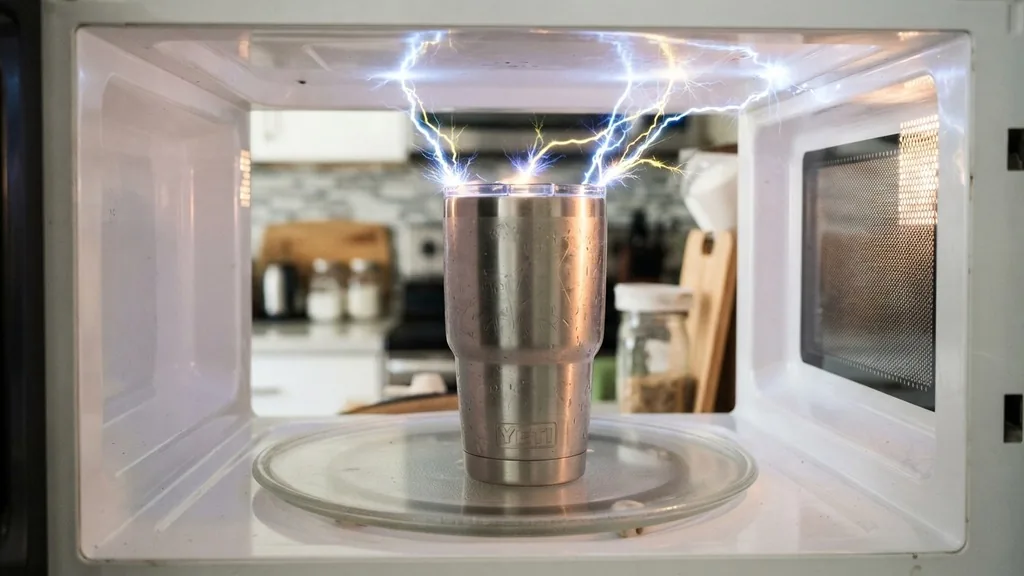
Many outdoor enthusiasts and daily commuters wonder, are yetis microwave safe when they find themselves with a cold cup of coffee that needs a quick reheat. The short answer is a definitive no; you should never place your Yeti Rambler or any other stainless steel drinkware into a microwave.
While these containers are engineered for exceptional thermal retention and durability, the fundamental physics of how a microwave oven interacts with metal makes them incompatible. Using a microwave to heat your beverage inside a vacuum-insulated steel container poses significant risks not only to the integrity of the vessel itself but also to the appliance you are using.
The Physics of Metal and Microwave Radiation
To understand why your Yeti cup is not designed for the microwave, you must first understand the basic operation of a microwave oven. Microwaves work by emitting electromagnetic waves that cause water molecules in food or liquids to oscillate rapidly. This friction generates heat, which warms your food or drink.
When you introduce metal into this environment, the situation changes drastically. Metal is a conductive material, meaning it possesses free electrons that move easily.
When electromagnetic waves from a microwave strike a metallic surface, the waves induce an electric current within the metal. Because the metal of a Yeti mug is typically a solid, continuous structure, these currents—known as eddy currents—build up rapidly. If the metal is thin or has sharp edges, the electrons can accumulate at those points, leading to an electrical discharge or arcing.
This is the visual manifestation of sparks jumping across the surface. While a heavy-duty stainless steel tumbler might not always spark immediately, the internal components of the microwave, specifically the magnetron, can suffer catastrophic failure. The energy that should be absorbed by your liquid is instead reflected or concentrated on the metal, potentially causing the microwave to overheat, smoke, or permanently malfunction.
Why Vacuum Insulation Complicates Heating
Beyond the dangers of electrical arcing, there is a structural reason why you should avoid putting your yeti cups in the microwave. Yeti drinkware is famous for its double-wall vacuum insulation.
This design features an inner and outer layer of stainless steel with the air removed from the space between them. This vacuum acts as a powerful thermal barrier, preventing heat transfer.
When you attempt to heat a drink inside a vacuum-insulated container, the microwave radiation is largely blocked from reaching the liquid inside. Because the outer shell is made of thick, high-grade steel, it effectively shields the contents from the energy waves. Consequently, the liquid will not heat up efficiently, if at all.
Even if you manage to avoid arcing, you are essentially wasting energy and risking the structural integrity of the vacuum seal. If the extreme heat generated on the surface of the metal causes the seal at the base of the cup to fail, you will lose the vacuum insulation entirely, rendering the cup useless for maintaining temperatures. Once that seal is broken, the mug will no longer keep your coffee hot or your water cold, effectively turning a premium piece of gear into an ordinary, non-insulated cup.
Comparing Materials for Microwave Use
To clarify why specific materials behave differently, it is helpful to look at how common kitchen items interact with microwave energy. Not all materials are built the same, and understanding these differences can prevent kitchen accidents and ruined appliances.
| Material | Microwave Safe | Reasoning |
|---|---|---|
| Stainless Steel | No | Conductive; causes arcing and reflects waves. |
| Ceramic | Yes (mostly) | Non-conductive; allows waves to pass through. |
| Borosilicate Glass | Yes | High thermal shock resistance; non-conductive. |
| Plastic (BPA-free) | Conditional | Must be labeled “microwave safe” to avoid melting. |
As shown in the table, stainless steel is distinctly unsuitable for microwave use. While ceramic and glass are generally safe, you should always check for metallic glazes or rims, as even a small amount of decorative gold or silver trim can trigger arcing. When you put a container in the microwave, you are relying on the material’s ability to remain “transparent” to the electromagnetic waves so that the energy is absorbed by the food or liquid rather than the container itself.
Consequences of Ignoring Safety Guidelines
If you choose to ignore the warnings and proceed with microwaving your Yeti, the consequences range from minor annoyance to major property damage. The most immediate risk is the destruction of your microwave oven.
The magnetron, which is the heart of the microwave, can be damaged when it cannot properly dissipate the energy it generates. If the energy is reflected back into the magnetron by the steel cup, it can lead to internal overheating and a total breakdown of the appliance.
Furthermore, there is a significant risk of fire. While the steel itself may not burn, any residue on the outside of the cup or the high-heat intensity near the base can ignite nearby materials or cause the plastic components of the microwave to melt. Additionally, the heat buildup on the surface of the stainless steel can result in severe burns if you attempt to touch the cup immediately after the cycle ends.
Even if the liquid inside remains lukewarm, the exterior of the yeti cup can become dangerously hot, potentially causing you to drop it and spill the contents. For more information on the proper care of insulated containers, you can consult the FDA’s guidelines on safe food handling and equipment safety.
Alternative Methods for Reheating Beverages
Since you cannot put your favorite tumbler in the microwave, you might wonder how to reheat your coffee or tea effectively without losing the convenience of your Yeti. The most straightforward approach is to pour the liquid into a microwave-safe ceramic mug, heat it to your desired temperature, and then pour it back into your Yeti. While this involves an extra step and an extra dish to clean, it preserves the longevity of your insulated gear.
Another option is to use a stovetop. If you have a small saucepan, you can pour your drink into it and gently heat it over a low flame. This method allows you to control the temperature precisely, preventing the liquid from scorching.
For those who are constantly on the go, investing in a portable cup warmer or a heated coaster can also be an excellent solution. These devices allow you to maintain the temperature of your drink directly in the mug without needing to transfer it. By adopting these habits, you ensure that your gear remains in top condition for years, protecting your investment while still enjoying a hot beverage.
Debunking Common Myths About Metal and Microwaves
There is a persistent myth circulating on social media and forums that suggests it is safe to microwave metal if the container is “thick enough” or if the liquid level is high. This is dangerous misinformation.
Regardless of the thickness of the steel, the fundamental interaction between electromagnetic waves and conductive materials remains the same. The presence of hot liquids does not negate the electrical laws governing how microwaves behave.
Some users claim they have microwaved their yeti cups without incident. While this may be true in some instances—perhaps due to a lower power setting or a particularly robust microwave—it is a gamble that is not worth taking. Relying on “it worked once” is a dangerous precedent that ignores the cumulative stress placed on the appliance’s magnetron.
Over time, the internal components weaken, and what worked once might result in a spark-filled catastrophe the next time. It is always better to follow the manufacturer’s explicit instructions, which clearly state that these products are not intended for use in a microwave. When in doubt, always prioritize the safety of your home and the lifespan of your kitchen appliances over a small convenience.
Caring for Your Yeti Gear
To keep your drinkware performing at its peak, proper maintenance is essential. While you should never put your Yeti in the microwave, you should also be mindful of how you clean it. Most Yeti Ramblers are dishwasher safe, but if you have a model with a specialized coating, hand-washing is often recommended to prevent long-term cosmetic damage.
- Always rinse your cup thoroughly after each use to prevent residue buildup.
- Avoid using abrasive scrubbers that can scratch the interior stainless steel surface.
- Check the lid seal (gasket) regularly for signs of wear or mold growth.
- Ensure the cup is completely dry before storing it to maintain hygiene.
- Do not use harsh chemical cleaners that could degrade the food-grade steel.
Taking care of your gear ensures that it continues to function as intended. By avoiding the microwave and following these simple cleaning practices, you ensure that your yeti cup remains a reliable companion for years to come. Whether you are at the office, on a hiking trail, or just relaxing at home, your insulated tumbler is designed to handle extreme temperatures naturally, not through artificial heating methods.
Frequently Asked Questions
Can I put my Yeti in the dishwasher?
Most modern Yeti Rambler products are dishwasher safe. However, you should always check the specific product label or the official website for your particular model. Placing them on the top rack is generally recommended to protect the exterior finish from high-heat cycles and harsh detergents.
What happens if I accidentally microwave a Yeti?
If you accidentally microwave a Yeti, stop the cycle immediately. Check the inside of the microwave for any signs of arcing or burning. If the microwave continues to function normally, you may have avoided damage, but you should never repeat the action, as it strains the internal magnetron components.
Are there any insulated mugs that are microwave safe?
Generally, vacuum-insulated stainless steel mugs are not microwave safe. If you require a microwaveable insulated mug, look for products specifically marketed as “microwave safe,” which are usually made from high-grade, double-walled ceramic or specialized microwave-compatible polymers that do not contain metal components.
Why does my coffee get cold in a Yeti?
If your coffee is losing heat quickly, the vacuum seal may have been compromised. This usually happens if the cup is dropped or if the seal at the base is damaged. Once the vacuum is broken, the cup loses its insulating properties and will function like a standard, non-insulated container.


