

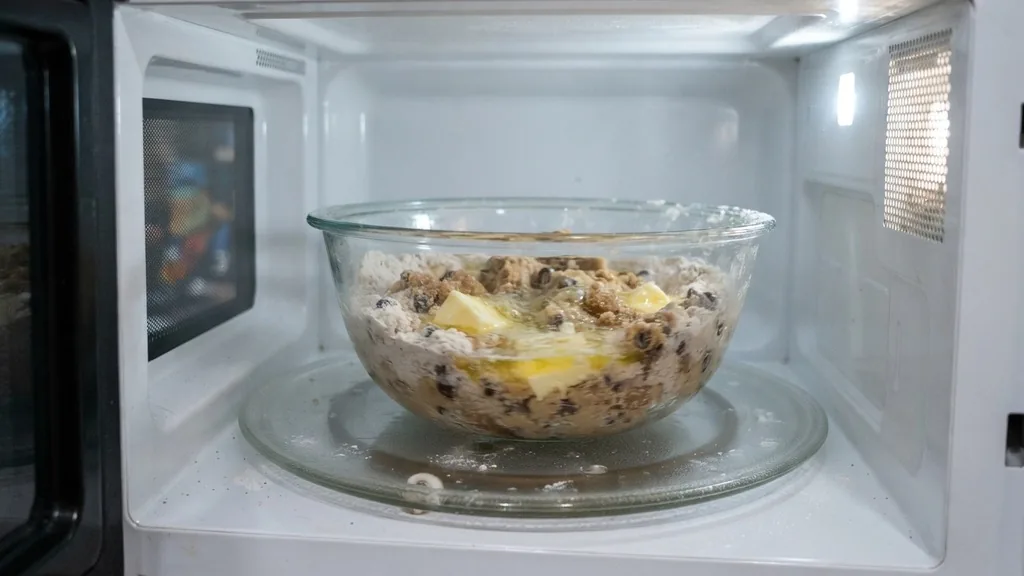
When you are craving a warm, gooey treat but lack the patience to preheat your oven, the question of whether you can you microwave cookie dough often comes to mind. While the microwave is a marvel of modern convenience, applying it to cookie dough is not as straightforward as popping in a slice of leftover pizza. The primary concern is not just the final texture, but the chemical and biological integrity of the ingredients involved.
Because microwaves heat food by agitating water molecules, they can produce uneven results, leading to centers that remain raw while the edges become hard or scorched. Understanding the science behind this process is essential for anyone hoping to turn a scoop of dough into a warm dessert without compromising food safety or culinary quality.
The Science of Microwaving Cookie Dough
To understand if you can you microwave cookie dough, one must first consider the unique composition of this mixture. Traditional cookie dough contains a delicate balance of fats (butter), sugars, proteins (flour and eggs), and leavening agents.
When you place this in an oven, the heat is applied consistently through convection, allowing the structure of the cookies to set while the chocolate chips melt and the sugars caramelize. In a microwave, the electromagnetic waves target water molecules primarily, which causes the fat to melt rapidly and the proteins in the flour to undergo a different structural change than they would in a traditional bake.
Because the microwave does not create a dry, hot environment, the moisture remains trapped in the dough. This often results in a texture that is less like a crispy, golden-brown chocolate chip treat and more like a dense, molten cake or a pudding-like substance. Furthermore, the lack of air circulation means you will not achieve the Maillard reaction—the chemical process that gives baked goods their characteristic browning and complex flavor profile.
If you are looking for that specific crunch, the microwave will almost certainly disappoint you. However, if you are aiming for a warm, soft dessert, it can be a viable method, provided you adjust your expectations and techniques significantly.
Addressing Food Safety and Raw Ingredients
A critical factor that often gets overlooked in the debate over microwaving is the safety of the ingredients. Commercial cookie dough is frequently formulated with heat-treated flour and pasteurized eggs, but many homemade versions contain raw flour and raw eggs.
Raw flour is a known carrier of E. coli, and raw eggs pose a risk of Salmonella. According to the Centers for Disease Control and Prevention, you should never consume raw dough, and simply microwaving it for a few seconds might not reach the internal temperature required to kill these pathogens.
When you microwave a small amount of dough, the heat distribution is notoriously inconsistent. You might find that the exterior reaches a high temperature while the center remains at room temperature, failing to eliminate the potential bacteria. If you intend to “cook” your dough in the microwave to make it safe to eat, you must ensure that the entire mass reaches a temperature of at least 160°F (71°C) throughout.
This is difficult to measure in a mug or small dish, making the microwave a risky tool for sanitizing raw dough. Always check the packaging of store-bought brands; if it is labeled as “ready-to-bake,” it is meant to be cooked in an oven, and the microwave instructions are often absent for a reason.
Techniques for a Successful Microwave Treat
If you are determined to proceed, you can improve your success rate by treating the process more like making a “mug cake” than baking a standard batch of cookies. Using a microwave-safe mug or a small ramekin is essential.
Start by greasing the container lightly to prevent the dough from sticking, which makes cleanup much easier. If the recipe is too stiff, you might need to add a splash of milk or a small amount of melted butter to help it distribute heat more evenly.
The secret to success lies in the time and power settings. Do not blast the dough on high power for a long duration. Instead, use a series of short bursts—typically 15 to 30 seconds—and stir or check the texture in between.
This prevents the edges from turning into rubber while the middle is still liquid. If you are adding extra chocolate chips or nuts, ensure they are distributed throughout the mixture so that they do not create “hot spots” that burn while the rest of the dough is still raw.
- Use a microwave-safe mug or small glass ramekin.
- Add a teaspoon of milk or water if the dough seems too dry.
- Microwave in 20-second intervals to monitor the texture.
- Let the dough sit for one minute after heating to allow the heat to distribute evenly.
- Avoid using metal spoons or utensils in the microwave.
Comparison of Baking Methods
To better visualize how the microwave stacks up against traditional methods, it is helpful to look at the expected outcomes based on heat application and end results.
| Feature | Oven Baking | Microwave Heating |
|---|---|---|
| Texture | Crispy edges, chewy center | Soft, gooey, dense |
| Cooking Time | 10-15 minutes | 30-90 seconds |
| Browning | Gold-brown (Maillard reaction) | Minimal or none |
| Safety | Reliable pathogen elimination | Variable, requires high heat |
As demonstrated in the table, the microwave is essentially a tool for rapid warming rather than true “baking.” If your goal is to recreate the experience of a fresh chip cookie, the oven remains the gold standard. The microwave is better suited for when you have a recipe specifically designed for a mug, which usually includes additional leavening agents like baking powder to give the dough the lift it lacks when cooked at high speeds.
Common Topical Gaps: Why Some Doughs Fail
A frequently asked question is why specific brands or types of dough seem to perform worse in the microwave than others. The answer lies in the fat-to-flour ratio. Many store-bought cookie dough products are designed to spread and crisp in a dry, hot oven environment.
When you subject these high-fat formulas to the moist, intense energy of a microwave, the butter separates from the solids almost immediately. You end up with a pool of grease surrounding a clump of undercooked flour.
Furthermore, the sugar content in many commercial brands is optimized for caramelization at 350°F. In the microwave, the sugar may melt but it won’t brown, leading to a cloying, overly sweet taste that lacks the nutty, toasted notes of a properly baked cookie. If you want to use store-bought dough, it is often better to break the dough into very small pieces and mix it into a simple batter of flour, sugar, and milk to create a “mug cookie” that has the structural integrity to withstand the microwave’s unique heating profile.
Expert Tips for Enhancing the Microwave Experience
If you find yourself with a craving and only a microwave at your disposal, you can elevate the result with a few simple additions. Since the microwave tends to mute flavors, consider adding a pinch of sea salt or a dash of vanilla extract to the dough before cooking. These ingredients help balance the sweetness and provide a more sophisticated flavor profile that might otherwise be lost.
Pairing your microwave-warmed dough with ice cream is another excellent way to compensate for the lack of texture. The cold, creamy contrast of the ice cream against the hot, gooey dough creates a dessert experience that feels intentional rather than a “shortcut.” If the dough is too soft, you can also add a small amount of crushed graham crackers or oats to provide a bit of crunch, mimicking the texture of a traditional baked treat.
Remember that the time required will vary significantly depending on the wattage of your microwave; a 1200-watt machine will cook the dough much faster than a 700-watt model. Always start with less time than you think you need; you can always add more minutes or seconds, but you cannot fix a burnt, rock-hard mess once it has solidified.
Frequently Asked Questions
Is it safe to eat raw cookie dough if I microwave it?
Microwaving is not a guaranteed method for eliminating foodborne pathogens like E. coli or Salmonella. Because heat distribution in a microwave is uneven, parts of the dough may remain cool enough for bacteria to survive. Always ensure the dough reaches an internal temperature of 160°F to be safe.
Can I microwave frozen cookie dough?
Yes, you can, but you must thaw it first or use very low power settings. If you put frozen dough directly into the microwave, the outside will burn or become rubbery before the center has even thawed. It is best to let it reach room temperature or use the defrost setting for a minute.
Why does my microwave cookie dough taste rubbery?
The rubbery texture is usually caused by overcooking or the specific protein structure of the flour reacting to the steam inside the microwave. When the dough is heated too quickly, the proteins tighten up, creating a dense, chewy, or rubbery consistency rather than a light, airy crumb.
Can I use any type of cookie dough in the microwave?
While you technically can, not all doughs are created equal. Recipes containing nuts, oats, or high amounts of chocolate chips generally hold their shape better. Avoid doughs that are exceptionally high in butter content, as they are more likely to turn into a greasy, separated mess rather than a cohesive cookie.


