

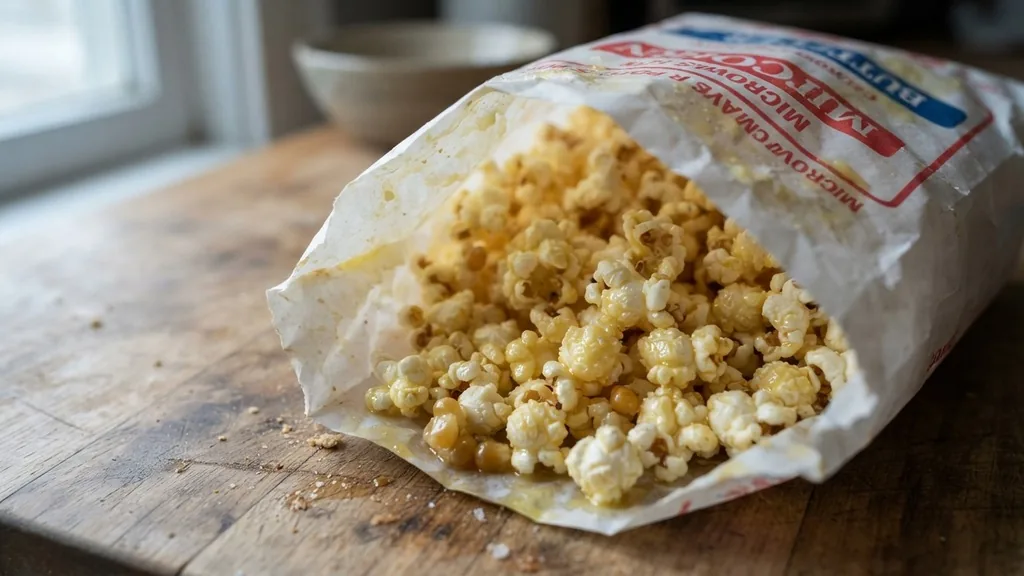
Many pantry staples have a reputation for lasting indefinitely, but microwave popcorn occupies a more complicated space in the world of food storage. While it is a dry good, the unique composition of the product—which includes kernels, fats, flavorings, and a specialized paper bag—means that microwave popcorn does indeed go bad. Understanding the nuances of its shelf life requires looking beyond a simple printed date on the box and examining how environmental factors like moisture, heat, and light interact with the ingredients inside the bag.
When you ask, “does microwave popcorn go bad,” you are essentially asking about the chemical stability of the fats used for seasoning and the structural integrity of the corn itself. Unlike plain, unpopped kernels stored in a glass jar, which can last for years if kept in a cool, dark place, the pre-packaged microwave variety is a processed food product. It is designed for convenience, but that convenience comes with a trade-off regarding long-term storage.
Understanding the Shelf Life of Microwave Popcorn
The primary reason microwave popcorn has a finite lifespan is the presence of oils and fats. To facilitate the popping process in a microwave, manufacturers coat the kernels in a mixture of hydrogenated or vegetable oils, salt, and artificial or natural flavorings. Fats are susceptible to oxidation over time.
When fats oxidize, they undergo a chemical process that results in them turning rancid. Rancidity does not necessarily make a product immediately dangerous in the way that pathogenic bacteria might, but it significantly degrades the quality, flavor, and aroma of the food.
Most manufacturers provide an expiration date on the packaging. It is crucial to understand that this date is typically a “best by” or “quality guarantee” date rather than a strict safety cutoff. However, once that date passes, the likelihood of the oils becoming rancid increases significantly.
Furthermore, the paper bag itself is lined with a susceptor—a metallic-looking layer designed to absorb microwave energy and heat up rapidly. Over long periods, this lining can degrade, or the chemicals used in the bag can leach into the popcorn, though this is less of a concern than the degradation of the fat content.
If you find a box of popcorn in the back of your pantry, you should inspect it thoroughly before deciding to eat it. If the box has been stored in a temperature-controlled environment away from direct sunlight, it may still be edible shortly after the date, but the sensory experience will likely be subpar. If the box shows signs of physical damage or has been exposed to extreme temperature fluctuations, it is safer to discard it.
How Moisture Impacts Kernel Popping Performance
The science behind popcorn is entirely dependent on moisture. Inside each kernel is a tiny amount of water surrounded by a hard, non-porous outer shell called the pericarp.
When the kernel is heated, the internal water turns into steam, creating pressure that eventually causes the starch to gelatinize and the shell to burst. This is what creates the fluffy, white structure we recognize as popped corn.
If the moisture content of the kernel is too low, the pressure will not build sufficiently to pop the shell. This is why stale kernels often fail to pop or result in “old maids”—the unpopped kernels left at the bottom of the bowl.
When microwave popcorn sits on a shelf for too long, the barrier of the bag and the oily coating provide some protection, but they are not hermetic seals. Over months or years, the kernels can lose their internal moisture to the surrounding air, especially in dry climates.
Conversely, if the environment is too humid, the kernels might absorb extra moisture. While this sounds helpful, it is actually detrimental. Excess moisture can make the final texture chewy or tough rather than light and crispy.
Therefore, the goal for long-term storage is to maintain a consistent environment. If you want to learn more about the scientific principles of food safety and storage, you can refer to the United States Department of Agriculture guidelines on pantry storage.
Identifying Signs of Rancidity and Spoilage
Distinguishing between a high-quality product and one that has gone bad is a sensory exercise. Since expired popcorn doesn’t always show obvious physical signs, you have to rely on your nose and your eyes. Rancid oil has a very distinct, unpleasant odor.
It is often described as smelling like old paint, crayons, or damp cardboard. If you open a bag and the scent is “off” or metallic, the fats have definitely oxidized, and the product should not be consumed.
Beyond the smell, look at the appearance of the kernels and the bag. If you notice any signs of mold, you must discard the product immediately. Mold growth is rare in dry, sealed microwave popcorn, but it can occur if the bag was punctured or exposed to high humidity, allowing water to infiltrate the package.
Additionally, check for signs of pest infestation. Tiny holes in the box or the bag are a clear indicator that insects have breached the packaging.
Here is a quick reference table to help you identify when it is time to throw your popcorn away:
| Indicator | What to Look For | Action Required |
|---|---|---|
| Odor | Musty, sour, or like old paint/crayons | Discard immediately |
| Visual | Visible mold or insect webbing | Discard immediately |
| Texture | Bag feels damp or paper is disintegrating | Discard immediately |
| Pop Rate | High percentage of unpopped kernels | Quality is low; discard if flavor is bad |
Can You Eat Expired Popcorn?
A common question is whether you can safely consume expired popcorn that is only a few months past its date. The answer is generally yes, provided the product has been stored correctly and shows no signs of rancidity or mold.
However, the experience of eating it will likely be underwhelming. The chemical changes that occur in the oils and the loss of moisture in the kernels mean that the popcorn will likely taste stale, have a less-than-ideal crunch, and potentially leave a bitter aftertaste due to the oxidized fats.
If the popcorn is significantly past its expiration date—for instance, a year or two—the risks increase. While it might not cause acute food poisoning, the nutritional value is essentially non-existent, and the consumption of oxidized fats is generally considered unhealthy due to the free radicals they produce. It is rarely worth the risk to your palate or your health to consume items that have been sitting in a pantry for several years.
Furthermore, consider the integrity of the microwave bag itself. These bags are coated with chemicals like perfluoroalkyl substances (PFAS) to prevent grease from leaking.
Over time, these materials can degrade. While research is ongoing regarding the long-term health impacts of these substances, consuming food from a bag that has been sitting for years increases the potential for chemical migration into the food during the high-heat process of microwaving.
Proper Storage to Extend Shelf Life
To maximize the life of your microwave popcorn, you must control the environment. The “pantry” is a broad term, but for long-term food storage, you need a specific type of environment. Your storage space should be:
- Cool: Temperatures should remain consistently below 75 degrees Fahrenheit. Heat accelerates the oxidation of oils.
- Dry: Humidity is the enemy of shelf-stable goods. Keep popcorn away from sinks, stoves, and dishwashers.
- Dark: Light can penetrate some packaging and degrade ingredients through photo-oxidation.
- Pest-proof: Store boxes in sealed plastic bins if you live in an area prone to pantry moths or rodents.
If you buy in bulk, do not keep all your boxes in the same location. Rotating your stock—using the “First In, First Out” (FIFO) method—is the best way to ensure you are always eating the freshest product.
If you have an open box, keep the remaining bags in a sealed Ziploc bag to provide an extra layer of protection against moisture and odors from other pantry items. Interestingly, coffee and spices can impart their odors into popcorn if they are stored in the same cupboard, so keep the popcorn in a dedicated area if possible.
Addressing Common Misconceptions and Topical Gaps
There is a pervasive myth that if you put “stale” microwave popcorn in the microwave, it will somehow be “refreshed.” This is incorrect.
Once the kernels have lost their internal moisture to the point where they won’t pop, no amount of microwaving will restore that water. In fact, running the microwave for longer to try and force the kernels to pop will only result in the oils burning and the bag catching fire.
Another common gap in knowledge is the difference between “raw” kernels and “microwave” kernels. Many people assume they are the same, but the treatment of the kernels is vastly different. Raw kernels are often processed to have a specific moisture content (around 13.5% to 14%) and are kept in a stable state.
Microwave kernels, however, are essentially “pre-conditioned” for the microwave. If you are looking for long-term food storage, you are much better off buying raw, unpopped kernels in a sealed container and adding your own oil or seasoning. This bypasses the issues of rancid additives and degrading paper bags entirely.
Finally, many people wonder about the “popping time.” Does a longer popping time mean the popcorn is bad? Not necessarily.
A longer popping time is often a sign of a low-wattage microwave or a very dry kernel. However, if you find that your popcorn consistently takes much longer to pop than the instructions suggest, it is a strong indicator that the moisture content is suboptimal, and you should consider replacing your supply.
Frequently Asked Questions
Is two-year-old microwave popcorn safe to eat?
While it is unlikely to cause immediate illness if it shows no signs of mold or extreme rancidity, it is not recommended. The fats will have almost certainly oxidized, leading to a bitter, stale taste, and the chemical coatings on the bag may have degraded, potentially leaching into the food.
How can I tell if my microwave popcorn has gone rancid?
The most reliable way is through smell. Rancid popcorn will have an unpleasant, sharp, or musty odor reminiscent of old paint or crayons. If the kernels look discolored or if the bag feels greasy or shows signs of moisture damage, you should throw the entire package away immediately.
Should I store my microwave popcorn in the refrigerator to make it last longer?
No, the refrigerator is generally a poor place for microwave popcorn. Refrigerators are high-humidity environments, and the moisture can seep into the kernels, ruining their popping ability. Additionally, the fats in the popcorn can absorb odors from other foods in the fridge, negatively impacting the flavor.
What happens if I eat expired microwave popcorn?
In most cases, you will simply experience a very unpleasant taste and texture. However, consuming significantly oxidized fats can be hard on your digestion, and in rare cases, if the product was stored in a way that allowed mold or bacterial growth, you could risk foodborne illness. It is best to avoid it.


