

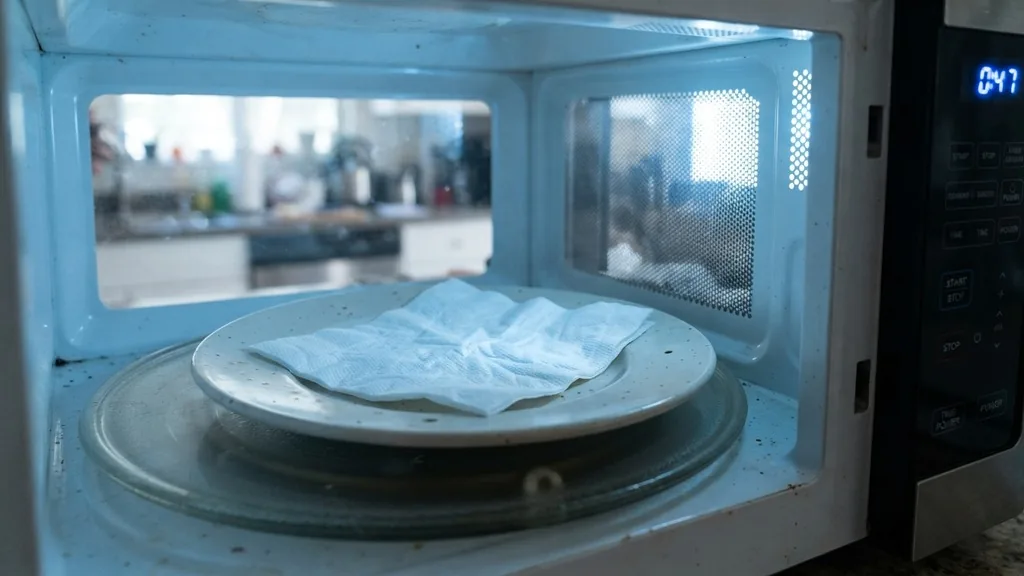
Deciding whether you can put a napkin in the microwave often comes down to a split-second decision when you are trying to reheat a slice of pizza or prevent a messy splatter inside your appliance. While many people routinely use paper products to cover their food, there is a distinct difference between “can” and “should.”
The short answer is that while many paper napkins are technically microwave-safe for brief periods, the risk of fire depends entirely on the composition of the napkin, the length of the heating cycle, and the presence of any non-paper contaminants. Understanding the physics of how your microwave interacts with cellulose materials is the best way to avoid a kitchen disaster.
The Science of Microwaving Paper Products
At its core, a microwave functions by emitting electromagnetic waves that cause water molecules within food to vibrate rapidly, generating heat through friction. When you place a dry napkin in the microwave, it generally does not absorb these waves in the same way that moist food does. However, the environment inside the chamber changes drastically once the napkin becomes saturated with steam, grease, or water from your food.
The primary issue is the flash point of paper. If the internal temperature of the microwave exceeds the point at which paper can ignite—usually around 450 degrees Fahrenheit—you risk a fire release.
The potential risks are compounded when the napkin is dry. If you place a completely dry napkin in the microwave for an extended period, it acts as a fuel source. Without moisture to regulate the heat, the paper can quickly become brittle and reach its combustion temperature.
This is why many manufacturers advise against using paper products for long cooking cycles. If you are simply warming something for 30 seconds, the paper usually stays below the threshold of danger. However, the longer the machine runs, the higher the likelihood of a localized hot spot igniting the fiber.
Distinguishing Between Napkins and Paper Towels
A common point of confusion is the difference between standard dinner napkins and heavy-duty paper towels. While both are made from cellulose fibers, their manufacturing processes and chemical additives differ significantly. Paper towels are typically engineered to be more absorbent and structurally sound when wet, making them the preferred choice for microwaving food. They are designed to withstand moisture without disintegrating immediately, which provides a more consistent barrier against splatters.
In contrast, many decorative or recycled napkins contain additives, dyes, or even metallic inks that can cause sparks or chemical off-gassing. If you are wondering if you can put a napkin in the microwave, always prioritize plain, white, unprinted paper. Avoid napkins with metallic foil accents, as these are essentially thin sheets of metal that will create arcing and electrical discharge.
Even some colored napkins use dyes that are not rated for high-heat exposure, which could potentially leach into your food or release unpleasant odors when heated. When in doubt, a plain white paper towel is almost always the safer alternative to a decorative napkin.
Identifying Potential Risks and Fire Hazards
The primary hazard when heating paper is the presence of flammable materials in close proximity to the magnetron’s output. If you frequently ask, “can you put a napkin in the microwave,” you are likely interested in the safety protocols established by the United States Department of Agriculture regarding food safety and appliance usage.
The most significant danger occurs when the paper is placed over fatty or sugary foods. Fat and sugar reach temperatures much higher than water, and if these substances splatter onto the napkin, the paper can ignite almost instantly.
Consider these factors that increase the risk of ignition:
- Grease saturation: Fats and oils have high boiling points and can easily ignite if they soak into the paper.
- Airflow obstruction: Large, loose napkins can be caught by the microwave’s internal fan, potentially blowing them into the heating element or the wall of the unit.
- Metallic content: Any ink with metallic properties will reflect microwaves, leading to electrical arcing.
- Duration: Heating for longer than 60 seconds significantly increases the drying effect on the paper, making it more susceptible to combustion.
Best Practices for Safely Microwaving Food
If you decide to use a napkin to cover your food, you must do so with caution. The best approach is to dampen the napkin slightly with a few drops of water before placing it over your dish. This increases the moisture content, which helps the paper resist scorching and prevents it from becoming overly brittle.
Furthermore, never allow the napkin to touch the food directly if the food is very greasy, such as bacon or heavily buttered items. The grease will transfer to the napkin and create a localized hot spot that can char the paper.
It is also vital to ensure that the napkin does not cover the food so tightly that steam cannot escape. Trapped steam can cause a rapid buildup of pressure, and if the paper is not porous enough, it might tear or shift. Always use a single layer of paper rather than a thick, wadded-up napkin.
A single layer allows for better heat dissipation and is less likely to trap enough heat to reach the ignition point. By keeping the layer thin and ensuring it is weighted down by the rim of the bowl or plate, you minimize the chance of it shifting and coming into contact with the sides of the microwave.
Comparison of Microwave-Safe Coverings
Not all covers are created equal. When deciding between a napkin, a paper towel, or a dedicated microwave-safe lid, it is helpful to look at the performance characteristics of each.
| Covering Type | Safety Rating | Pros | Cons |
|---|---|---|---|
| Plain Paper Towel | High | Absorbent, cheap, single-use | Can disintegrate if too wet |
| Standard Napkin | Moderate | Convenient, easily available | Risk of dyes/inks, thin |
| Silicone Lid | Highest | Reusable, durable, heat-proof | Requires washing |
| Plastic Wrap (Microwave-safe) | High | Excellent steam retention | Risk of melting if touching food |
As shown in the table, while napkins are acceptable for short-term use, they are not the most robust solution for every situation. If you are reheating a meal that requires more than a minute of cooking, investing in a dedicated glass or silicone cover is the most prudent choice. These covers are specifically designed to handle the thermal stress of the microwave environment without the risk of combustion or chemical contamination.
Addressing Common Myths and Topical Gaps
There is a persistent myth that all paper products are inherently “microwave-safe” because they are composed of wood pulp. However, this ignores the chemical treatments used in the paper industry.
Another common question is whether you can put brown napkins in the microwave. Generally, unbleached brown napkins are safer than bleached white ones because they contain fewer chemical additives, but they are still subject to the same physical limitations regarding heat and grease.
Another gap in common knowledge involves the use of recycled paper. Recycled napkins may contain small remnants of non-paper materials or adhesives from the recycling process that were not fully removed. While these are usually trace amounts, they can behave unpredictably under high-frequency electromagnetic fields.
Furthermore, many people ask if they can put a napkin in the microwave to “clean” or “dry” it. You should never put a damp napkin in the microwave with the intent of drying it out for reuse.
This is a fire hazard because the paper will eventually become completely dry, and the microwave will continue to heat the now-combustible material until it catches fire. Always use napkins for their intended purpose—covering food—and discard them immediately after.
Frequently Asked Questions
Is it safe to put a napkin in the microwave for 30 seconds?
Yes, for most standard paper napkins, 30 seconds is a safe duration. Ensure the napkin is plain, white, and not in contact with high-fat foods. Always monitor the appliance during the cycle to ensure no charring or smoke occurs.
Can I use a napkin to cover greasy food?
It is not recommended. Greasy food can cause the napkin to reach temperatures far exceeding the paper’s ignition point. If you must cover greasy food, use a microwave-safe glass plate or a dedicated silicone cover to avoid the risk of fire.
Why did my napkin spark in the microwave?
If your napkin sparked, it likely contained metallic inks or mineral-based dyes. These materials conduct electricity and react to microwave energy by creating electrical arcs. Discard any napkin that has metallic patterns or foil, as these are never safe for microwave use.
Can I put toilet paper in the microwave?
No, you should avoid using toilet paper in the microwave. It is often thinner and more prone to rapid combustion than paper towels or napkins. Additionally, some toilet paper contains softeners or fragrances that may release harmful chemicals when heated at high temperatures.


